
What New Jersey Laws Impact E-Bike and E-Scooter Accident Liability?
Electric bikes (e-bikes) and electric scooters (e-scooters) have changed how people get around New Jersey, whether you live in busier urban areas or smaller suburbs. They’re fast, affordable, and wildly popular, yet they’ve also contributed to a rise in serious accidents.
Riders who are struck by cars, injured by defective devices, or harmed due to unsafe road conditions often face painful recovery, expensive medical bills, and complicated legal questions. Chief among these questions: What are my rights, and who can be held liable after I’ve been injured in an e-bike or e-scooter accident?
If you’ve been injured by or while riding one of these devices, know that there are laws that govern e-bikes and e-scooters in New Jersey. These laws dictate how these devices are classified, what options victims have when pursuing compensation after an accident, and much more.
What are the E-Bike and E-Scooter Laws in New Jersey?
New Jersey legalized e-bikes and e-scooters in 2019 under N.J.S.A. 39:1-1, creating definitions that distinguish them from motorcycles and motor vehicles. These laws affect everything from where you can ride to what safety requirements apply, and ultimately how liability is determined after an accident.
E-Bikes Are Divided into Two Classes
- Class 1 E-Bikes: Equipped with a motor that only assists when the rider is pedaling and stops providing assistance at 20 mph.
- Class 2 E-Bikes: Equipped with a throttle that can propel the bike without pedaling, but the motor cuts off at 20 mph.
Both classes are treated like traditional bicycles under New Jersey law, meaning:
- They do not require registration, insurance, or a driver’s license.
- They can be ridden on roads, bike paths, and most public ways, unless prohibited by local ordinance.
- Riders must follow the same traffic rules as cyclists.
E-Scooters Are Treated Like Bicycles Too (With Some Differences)
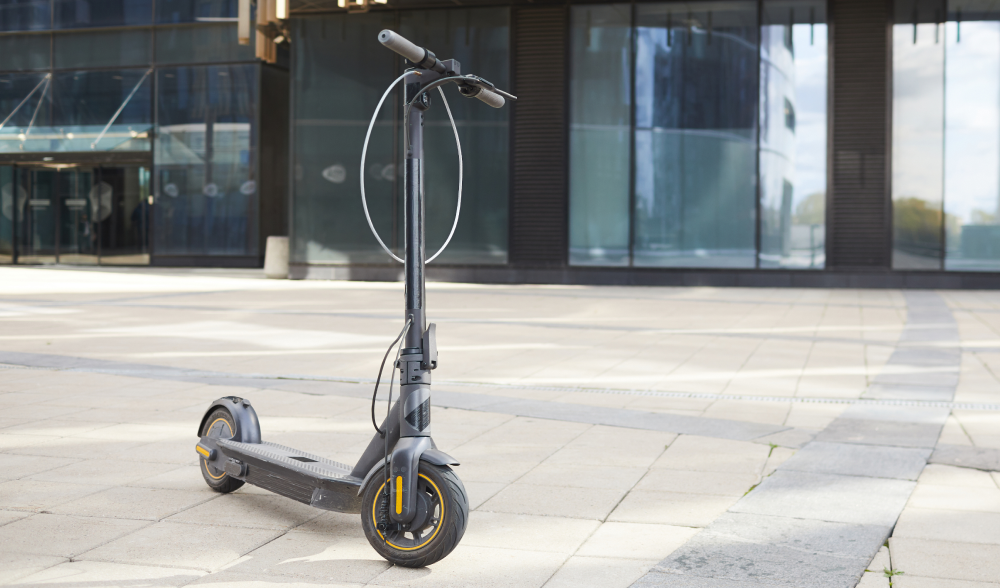
E-scooters, defined under N.J.S.A. 39:1-1 as “low-speed electric scooters,” and are characterized by:
- A floorboard for standing
- A set of handlebars
- An electric motor that can reach up to 19 mph
Just like e-bikes, e-scooters:
- Don’t require registration or insurance,
- Can operate on roads with speed limits under 25 mph and in bike lanes,
- Must follow all traffic laws that apply to bicycles, and
- Require riders under 17 to wear a helmet.
However, e-scooters are prohibited on sidewalks, and local municipalities can set additional restrictions.
Where Riders Can and Can’t Ride
Under New Jersey law:
- E-bikes and e-scooters are permitted on streets, bike paths, and bicycle lanes unless specifically restricted.
- They are not allowed on highways or interstates.
- Riders must obey traffic signals, yield to pedestrians, and operate with reasonable care.
These details matter after an accident because insurance companies and opposing parties often use location or traffic violations to argue that a rider was partially at fault.
Liability After an E-Bike or E-Scooter Accident
When an accident occurs, determining who is at fault depends on how it happened. Under New Jersey’s comparative negligence law (N.J.S.A. 2A:15-5.1), multiple parties can share liability.
You may still recover damages if you are not more than 50% at fault for the crash.
Some of the most common scenarios and who may be held responsible:
Motor Vehicle Drivers
Many e-bike and e-scooter crashes involve negligent drivers who fail to see riders or give them enough space. Common causes include:
- Distracted or aggressive driving
- Failing to yield at intersections or turns
- “Dooring” (opening a car door into a rider’s path)
- Speeding or reckless driving
In these cases, the driver and their insurance company can be held liable for the injuries and damages caused.
Manufacturers and Distributors
If the e-bike, e-scooter, or its components were defective. This could include issues such as a battery fire, brake failure, or sudden loss of power. If any of these contributed to your accident, you may have a product liability claim against the manufacturer or distributor.
Under the New Jersey Product Liability Act (N.J.S.A. 2A:58C-1 through 11), manufacturers are responsible for injuries caused by:
- Defective design (inherently unsafe engineering)
- Manufacturing defects (errors during production)
- Failure to warn about known dangers or maintenance risks
These claims require a detailed investigation into the product’s design, safety testing, and maintenance records.
Rental and Rideshare Companies
Companies like Lime, Bird, or other shared mobility providers are required to maintain their fleets in safe working condition. If an e-scooter or e-bike was poorly maintained or defective, and that caused an accident, the company could be liable.
In these cases, evidence such as maintenance logs, GPS data, and user reports can help prove negligence.
Municipalities or Government Entities
Sometimes, it’s not a driver or a device at fault. It’s the road itself. If a dangerous roadway, missing signage, pothole, or lack of bike lane maintenance caused your crash, a government entity (such as a city, county, or state agency) may be held liable.
However, these cases come with special rules:
- You must file a notice of claim within 90 days under the New Jersey Tort Claims Act (N.J.S.A. 59:8-8).
- Certain immunity defenses and damages caps may apply.
Because of these short deadlines and complex procedures, it’s crucial to speak with an attorney immediately after a crash involving public property.
Proving Fault in E-Bike and E-Scooter Accident Cases
To recover compensation, you must show that another party’s negligence caused your injuries. Evidence that can help prove fault includes:
- Police and crash reports
- Video footage (dashcams, surveillance cameras, helmet cams)
- Witness statements
- Maintenance and manufacturing records (for defective devices)
- Cell phone data showing distracted driving
At Eichen Crutchlow Zaslow, our personal injury lawyers will also work with accident reconstruction experts to determine exactly how the crash occurred and who was responsible.
What If I Was Not Wearing a Helmet?
New Jersey requires helmets only for riders under age 17, but insurers and defense attorneys may argue that not wearing one contributed to your injuries.
However, under New Jersey law, failure to wear a helmet does not automatically bar recovery. It may reduce your damages slightly under comparative negligence, but you can still pursue compensation if someone else caused your crash.
Insurance and E-Bike/E-Scooter Claims
Because e-bikes and e-scooters aren’t classified as motor vehicles, riders often don’t carry insurance specifically for them.
If you’re injured by a car while riding one, your own Personal Injury Protection (PIP) coverage under New Jersey’s no-fault auto insurance system may apply, even if you weren’t driving your car. If you don’t have PIP, you may be able to pursue a claim against the driver’s insurance policy.
For defective products or rental device claims, compensation comes through product liability or negligence lawsuits rather than insurance coverage.
Were You Catastrophically Injured? Call Our Attorneys Today
If you’ve been injured while riding an e-bike or e-scooter—or hit by someone operating one—it’s important to understand how New Jersey law treats these devices and what rights you have to pursue compensation.
At Eichen Crutchlow Zaslow, our experienced attorneys handle catastrophic injury cases involving e-bikes, e-scooters, and other motorized personal transportation devices. We know how to uncover the truth, hold negligent parties accountable, and fight for the financial recovery you need to move forward. Contact us today for a free, confidential consultation to discuss your case and learn how we can help.
Eichen Crutchlow Zaslow, LLP has purposely remained small in size, because it is important to us that we get to know our clients and their needs. Larger NJ injury firms may churn out case after case, but that’s not how we operate. Partners Barry Eichen, William Crutchlow, and Daryl Zaslow have created a firm with the resources to handle complex litigation, and a team that takes your case personally.
Find out more about Eichen Crutchlow Zaslow, LLP