
NJ’s New E-Bike Law and Injury Claims: What Riders and Drivers Need to Know in 2026
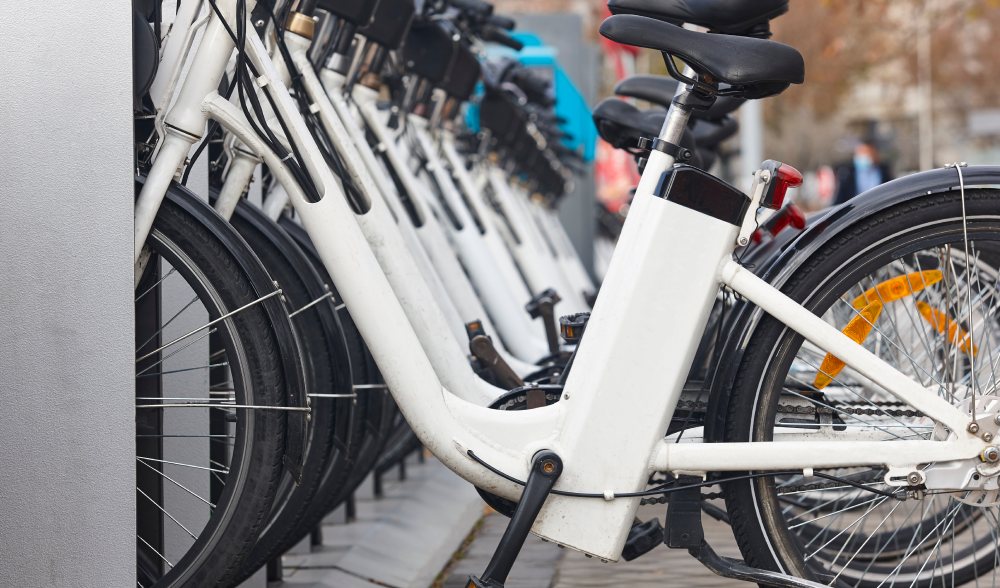
Renting an e-bike is a popular way to get around the Jersey Shore. You scan a QR code at a rental rack in Asbury Park or Wildwood, the lock clicks open, and you are riding down the avenue toward the beach. For years, that was all it took. Starting this summer, every e-bike ride comes with new restrictions due to New Jersey’s recently-enacted strict e-bike laws.
If you are injured in an e-bike accident, the new law changes how fault and compensation are handled compared to a standard bicycle accident. Here is what riders and drivers need to know.
The New Law Changes E-Bike Classification
On January 19, 2026, Governor Phil Murphy signed S4834/A6235 into law, the first major overhaul of New Jersey’s e-bike rules in years. It took effect immediately, with a grace period ending July 19, 2026. After that date, operating without the required license, registration, or insurance documents is a violation that carries a fine of up to $50 under S4834 §5(e), though a court may dismiss the charge if valid documents are produced afterward.
The central change is classification. Most states categorize electric bikes using a national three-class system:
- Class 1 (pedal-assist up to 20 mph)
- Class 2 (throttle-assist up to 20 mph)
- Class 3 (pedal-assist up to 28 mph)
New Jersey has changed that framework and folded electric bicycles into the state’s motor vehicle structure. This means the device many people consider a bicycle is now categorized much closer to a moped. The new classification carries safety standards, licensing, registration, and equipment rules that affect every New Jersey e-bike rider.
The New E-Bike Classifications
The New Jersey Motor Vehicle Commission (NJMVC) now provides these definitions:
- A low-speed electric bicycle (e-bike) is a two-wheeled bicycle with pedals where the motor assists only while pedaling and ceases to provide assistance when the bicycle reaches 20 miles per hour.
- A motorized bicycle (moped) is a pedal bicycle that is throttle-capable, with assisted speeds up to 28 miles per hour.
To ride either type of e-bike legally in New Jersey, here is what you need to know.
E-Bike Requirements
- Riders must be at least 15 years of age.
- Riders must possess a valid driver’s license, e-bike license, or e-bike permit.
- Motorized bicycles must be registered and carry liability insurance coverage. Low-speed e-bikes do not require insurance but still must be registered with the MVC.
- A helmet is mandatory for all e-bike riders, regardless of age.
How To Obtain An E-Bike License
1.
2.
3.
4. Schedule a Road Test.
5.
6.
How To Obtain An E-Bike Registration
1.
2.
3.
4. If an MCO, bill of sale, or formal proof of ownership is not available, the Motor Vehicle Commission may accept an affidavit from the current owner. The affidavit sets forth, with reasonable specificity, how ownership of the e-bike was acquired, along with any supporting documents, as proof of ownership.
5.
6.
E-bike licensing and registration are not yet available. According to the NJMVC, updates are forthcoming and will be posted on the website. You can sign up to receive email updates, and the agency will communicate as more information becomes available.
How an E-Bike Claim Differs from a Bicycle Claim
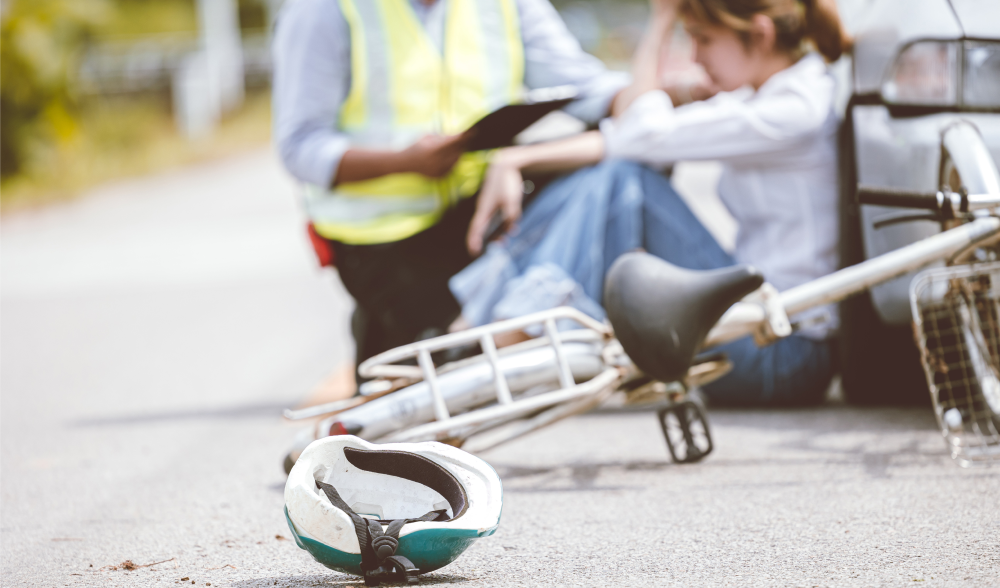
For an injured rider, the change is apparent in how a claim is handled. An e-bike crash is now evaluated under the insurance and liability framework that governs cars and mopeds rather than the one for ordinary bicycles, and questions of Personal Injury Protection (PIP) coverage can arise.
Who May Be Liable in an E-Bike Accident
In an e-bike accident, multiple parties may be liable. New Jersey follows modified comparative negligence under N.J.S.A. 2A:15-5.1, so an injured person may still recover compensation as long as they were not more than 50 percent responsible, with any award reduced by their share of fault.
Responsibility may fall on a distracted driver, a property owner whose dangerous conditions caused the crash, or a manufacturer whose defective battery, brakes, or motor failed. A defective product claim falls under the New Jersey Products Liability Act, N.J.S.A. 2A:58C-1 et seq.
What You Can Recover
Recoverable damages can include past and future medical expenses, lost wages and earning capacity, long-term care, and compensation for pain, suffering, and the loss of enjoyment of life. New Jersey places no cap on compensatory damages. In a worst-case scenario, if an e-bike accident is fatal, surviving family members may bring a claim under the New Jersey Wrongful Death Act, N.J.S.A. 2A:31-1 et seq. Most personal injury claims must be filed within two years of the date of injury, under N.J.S.A. 2A:14-2.
Talk to a Firm That Knows New Jersey’s Roads and Its Law
The e-bike law is new, and the procedures behind it are still developing. The experienced personal injury attorneys at Eichen Crutchlow Zaslow are following every development. Whether you ride an e-bike, or share the road with riders, understanding the new law is the first step toward protecting your rights.
If you or a loved one has been injured in an e-bike accident, the attorneys at Eichen Crutchlow Zaslow are prepared to investigate the circumstances, identify all responsible parties, and pursue full compensation.
Contact the New Jersey e-bike attorneys at Eichen Crutchlow Zaslow for a free, confidential consultation.
Eichen Crutchlow Zaslow, LLP has purposely remained small in size, because it is important to us that we get to know our clients and their needs. Larger NJ injury firms may churn out case after case, but that’s not how we operate. Partners Barry Eichen, William Crutchlow, and Daryl Zaslow have created a firm with the resources to handle complex litigation, and a team that takes your case personally.
Find out more about Eichen Crutchlow Zaslow, LLP