
How Public Transit Injury Cases Work in New Jersey: Evidence, Investigation, and Legal Review
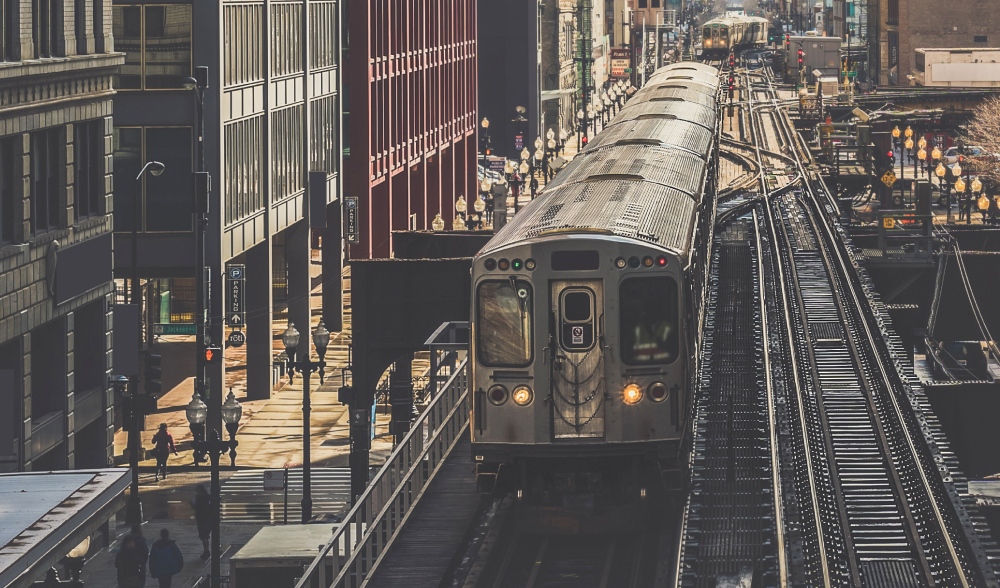
If you ride PATH into the city or take Light Rail through the suburbs, you know the routine. You board, find a seat, and generally do not think twice about what happens next. When a sudden stop throws you into a railing, or a train platform hazard you never saw coming takes you off your feet, your daily commute becomes something far more complicated.
What most riders do not realize is that a transit injury claim in New Jersey works nothing like a standard car accident case. The deadlines are shorter and the legal framework is more complicated. Knowing how these cases are built and investigated is the first step toward protecting your rights.
Public Transit Claims Operate Under a Different Legal Framework
Claims against public entities in New Jersey are governed by the New Jersey Tort Claims Act. The Act imposes requirements that do not apply to standard personal injury cases, and failing to meet them can eliminate the right to pursue compensation entirely.
The most consequential requirement is the notice deadline. An injured person must file a Tort Claim Notice within 90 days of the accident. This is not a lawsuit. It is a required preliminary step that preserves the right to file one. Exceptions are narrow and infrequently granted. The two-year statute of limitations for personal injury claims also applies in addition to the 90-day window to file the Tort Claim.
How Public Transit Cases Are Investigated
A thorough investigation of a transit injury claim reaches beyond the immediate circumstances of the accident. Attorneys handling these cases typically examine several categories of evidence.
Surveillance footage is among the most time-sensitive. Public transit vehicles and train stations are equipped with camera systems that capture passenger movement, operator conduct, and platform conditions before and after an incident. This footage is not retained indefinitely. Without a formal legal preservation request, it may be overwritten within days.
Maintenance and inspection records can establish whether a known hazard existed before the injury or accident occurred. Platforms, railings, boarding areas, and vehicle components are subject to routine inspection. Gaps in that record, or documentation showing a defect was reported and not addressed, can be significant in establishing negligence.
Incident and operator reports generated at the scene provide an early account of what occurred. These records are controlled by the transit agency and must be obtained through a legal process.
Internal communications between agency staff, maintenance personnel, and contractors may reveal what was known about a condition and when. These records are not typically produced voluntarily.
Witness accounts gathered immediately following the incident tend to be the most reliable. Identifying and contacting witnesses early is an important part of preserving a factual record.
Accident reconstruction experts can analyze vehicle speed, braking patterns, and the sequence of events leading to the injury. This analysis can be critical in establishing what happened and why, particularly in train accidents and grade crossing collisions where the sequence of events is often disputed.
Who May Be Responsible For A Transit Accident
Transit accidents often involve more than one responsible party. Liability may extend to the public transit system, the individual operator, a municipality responsible for roadway or crossing conditions, a manufacturer whose equipment failed, or a maintenance contractor that failed to address a known hazard. In some cases, a third-party driver at a grade crossing may share responsibility.
Many transit injuries include premises liability law. When a property owner knew or should have known about a hazardous condition on a platform, in a station, or at a terminal and failed to correct it, they may be held responsible for the harm that results.
Identifying every potentially liable party early is critical because a claim against a public entity triggers the 90-day Tort Claim Notice requirement, while a claim against a private manufacturer or contractor does not.
How Liability Is Proven in a Transit Injury Case
To establish liability in a New Jersey transit injury case, four elements must be demonstrated.
- Standard of care establishes what the transit agency, operator, or property owner was legally required to do. Public transit operators owe passengers a duty of care to maintain safe vehicles, platforms, and operating conditions.
- Breach of duty is established by showing the responsible party failed to meet that standard. A platform defect that went unaddressed, an operator who failed to follow procedure, or a maintenance contractor that ignored a known hazard can each constitute a breach. Maintenance records, inspection logs, and internal communications are often central to proving this element.
- Causation connects the breach directly to the injury sustained. It is not enough to show that a hazard existed. The evidence must demonstrate that the specific failure caused the harm. Medical records, surveillance footage, expert testimony, and witness accounts all contribute to establishing causation.
- Damages document the full scope of losses resulting from the injury. Medical expenses, lost wages, pain and suffering, and long-term care needs must all be supported by records, expert analysis, and, where applicable, testimony from treating physicians.
Each element must be established for a claim to succeed. An attorney experienced in transit injury litigation understands how to build a strong case from the start.

Transit Accident Review And Compensation
When an attorney evaluates a transit injury claim, the review focuses on several interconnected questions: whether the Tort Claim Notice was filed on time, what evidence exists and if it has been preserved, which parties bear responsibility, and the full scope of the injured person’s losses.
Compensation may include:
- Medical expenses
- Lost wages
- Pain and suffering
- Loss of enjoyment of life
- Loss of consortium
New Jersey does not cap compensatory damages in personal injury cases. Punitive damages may be available where conduct involved reckless or intentional misconduct, capped at $350,000 or five times the compensatory award, whichever is greater.
In a worst-case scenario, when a transit accident ends in a fatality, a wrongful death claim may be filed by the victim’s family.
Contact a New Jersey Transit Accident Attorney
Transit injury claims involve strict deadlines and multiple potentially liable parties. The attorneys at Eichen Crutchlow Zaslow have represented injured New Jersey residents for more than 40 years and have recovered over $1 billion for injured clients. If you or a family member was injured on PATH, Light Rail, NJ Transit, or any other public transportation system, contact us today for a free and confidential consultation.
Eichen Crutchlow Zaslow, LLP has purposely remained small in size, because it is important to us that we get to know our clients and their needs. Larger NJ injury firms may churn out case after case, but that’s not how we operate. Partners Barry Eichen, William Crutchlow, and Daryl Zaslow have created a firm with the resources to handle complex litigation, and a team that takes your case personally.
Find out more about Eichen Crutchlow Zaslow, LLP