
Construction Falls in New Jersey: What Injured Workers Need to Know
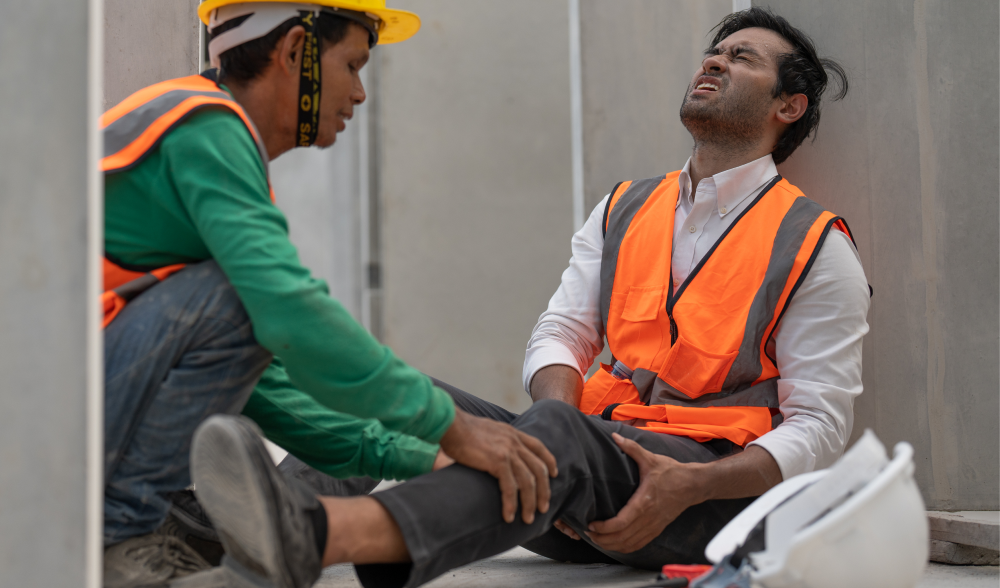
Every day you go to work on a construction site in New Jersey, you have the right to expect safe worksite conditions. Despite strict government regulations, falls on construction sites still remain a leading cause of severe injuries.
When a construction site accident causes a catastrophic injury, workers have the right to pursue full compensation if the harm results from third-party negligence.
How Construction Site Falls Happen
Construction site accidents are not random events. Many incidents can be traced back to a failure in safety protocols. Missing safety railings, improperly secured scaffolding, defective ladders, absent personal fall arrest systems, inadequate safety belts, unmarked floor openings, and lack of safety training can all create conditions that lead to injury.
Key Occupational Safety and Health Administration (OSHA) Statistics
Reported from 2015-2024
Violations in 2024
“very safe” on Jobsite, and 1 in 10 Feel Unsafe
Data sourced from:
Workplace Injury Statistics You Should Know In 2026
OSHA 2024 Annual Report
OSHA Fall Safety Protocols
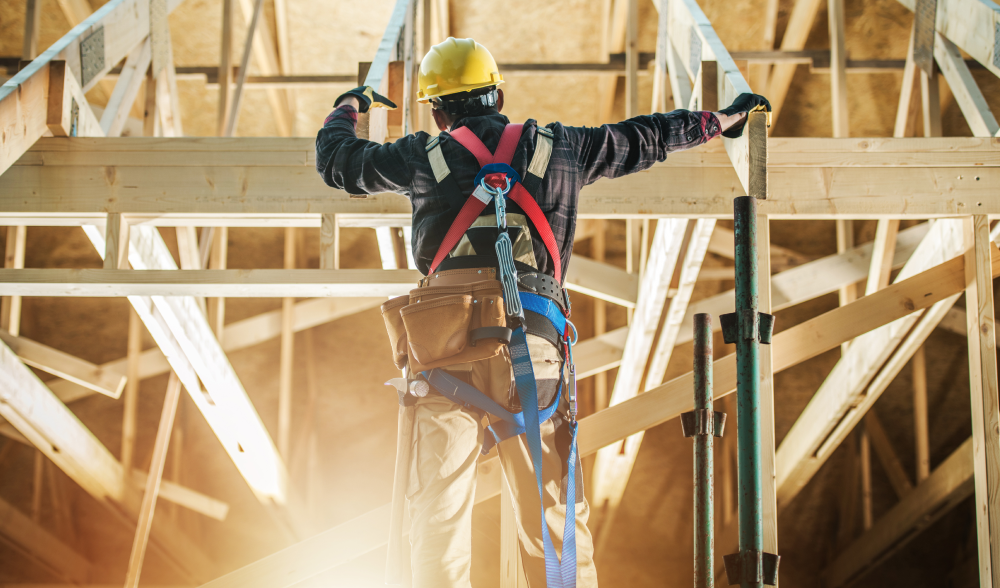
OSHA has strict requirements for construction sites to ensure worker safety. Violating any one of these standards can result in fines and correlate to negligence.
To prevent employees from being injured from falls, employers must:
- Guard every floor hole into which a worker can accidentally walk (using a railing and toe-board or a floor hole cover).
- Provide a guard rail and toe-board around every elevated open-sided platform, floor or runway.
- Regardless of height, if a worker can fall into or onto dangerous machines or equipment, employers must provide guardrails and toe-boards to prevent workers from falling and getting injured.
- Other means of fall protection that may be required for certain jobs include safety harnesses and lines, safety nets, stair railings and handrails.
OSHA requires employers to:
- Provide working conditions that are free of known dangers.
- Keep floors in work areas clean and as dry as possible.
- Select and provide required personal protective equipment at no cost to workers.
- Train workers about job hazards in a language that they can understand.
What to Do After a Construction Fall
The actions taken in the hours and days following a fall can protect both recovery and any legal claim.
1.
2.
3.
4.
5.
6.
Understanding Workers’ Compensation Benefits
Workers’ compensation is a no-fault program providing limited benefits to employees injured on the job.
Types of Benefits Available to New Jersey Workers:
Temporary Total Disability (TTD)
When a fall leaves you unable to work for more than seven days, you may be entitled to Temporary Total Disability benefits equal to 70% of your average weekly wage. These payments continue until a treating physician clears you to return to work or you reach maximum medical improvement (MMI).
Permanent Partial Disability (PPD)
If your injuries result in lasting impairments but you retain the ability to perform some form of work, you may qualify for Permanent Partial Disability benefits. The amount you receive is determined by the nature and severity of your condition.
Permanent Total Disability (PTD)
Workers whose fall-related injuries leave them permanently unable to perform any type of gainful employment may qualify for Permanent Total Disability benefits. These benefits are designed to provide ongoing financial support when a return to the workforce is no longer possible.
Accepting workers’ compensation prevents a worker from suing their employer directly for pain and suffering damages, except in cases of intentional acts.
Third-Party Claims in Construction Fall Cases
If a general contractor, subcontractor, property owner, or equipment manufacturer contributed to the conditions that caused the fall, an injured worker may pursue a third-party claim alongside workers’ compensation. That civil claim can seek the full range of damages, including pain and suffering.
New Jersey premises liability law requires property owners to maintain reasonably safe conditions for workers on their property. When a property owner knew or should have known of a hazardous condition and failed to correct it, they may be held liable for injuries that result.
If defective equipment played a role in the fall, a separate products liability claim may be available against the manufacturer or distributor under the New Jersey Products Liability Act. This act imposes strict liability for design defects, manufacturing defects, and failures to warn.
Fall Injury Claim Deadlines That Cannot Be Missed
Most personal injury claims must be filed within two years of the date of injury. In a worst-case scenario and the fall results in a fatality, a wrongful death claim may be filed by the worker’s family within the same two-year window. Falls on public works or government-managed sites require a Tort Claim Notice to be filed within 90 days. Missing any deadline can bar recovery entirely.
What Compensation May Be Available
An injured worker may recover damages including:
- Medical expenses and future care costs, including hospitalization, surgery, rehabilitation, and long-term treatment
- Lost wages and reduced earning capacity
- Pain and suffering
- Emotional distress
- Loss of enjoyment of life
- Loss of consortium
Punitive damages may also be available in cases of reckless disregard for worker safety, capped at $350,000 or five times the compensatory award, whichever is greater. New Jersey does not cap compensatory damages.
Speaking With a Construction Accident Lawyer
Construction fall claims involve strict deadlines, multiple parties, and evidence that can disappear quickly. The construction accident lawyers at Eichen Crutchlow Zaslow have represented injured workers throughout New Jersey for more than 40 years and recovered over $1 billion for our clients. We provide the same dedication to every client we represent.
If you or a family member was injured in a construction fall, contact us today for a free and confidential consultation.
Eichen Crutchlow Zaslow, LLP has purposely remained small in size, because it is important to us that we get to know our clients and their needs. Larger NJ injury firms may churn out case after case, but that’s not how we operate. Partners Barry Eichen, William Crutchlow, and Daryl Zaslow have created a firm with the resources to handle complex litigation, and a team that takes your case personally.
Find out more about Eichen Crutchlow Zaslow, LLP