
What Causes The Most Construction Deaths In New Jersey? Understanding The Fatal Four
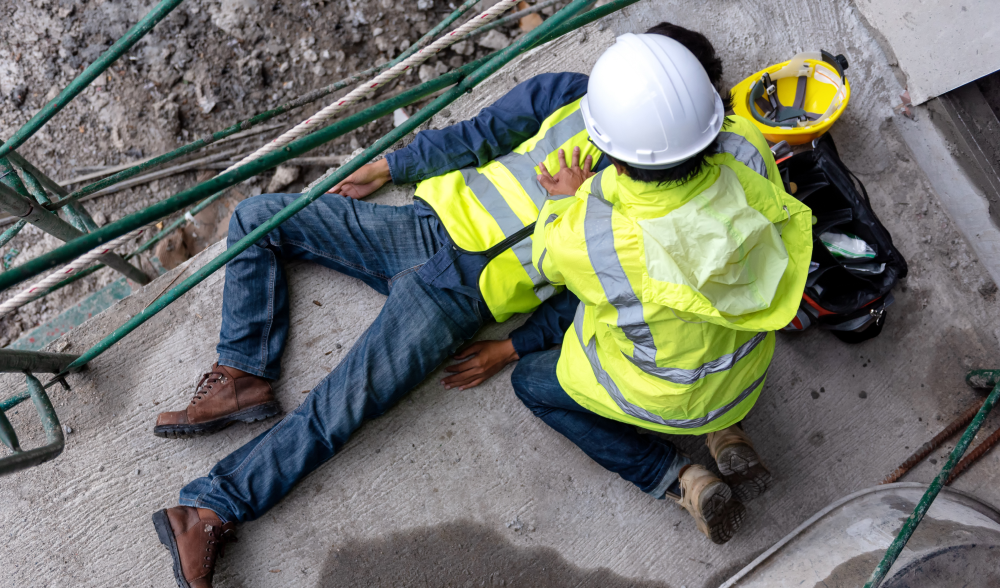
Construction spending in New Jersey is projected to reach nearly $17 billion in 2026, according to NJBiz. That growth brings more crews, more equipment, and more chances for construction workers to be injured on a worksite.
The Occupational Safety and Health Administration (OSHA) states that four deadly hazards account for around 60% of fatal work injuries in construction. Known as the “Fatal Four,” these hazards include falls, struck-by incidents, electrocutions, and caught-in (or caught-between) accidents. Many of these deaths are preventable when safety protocols are followed.
Falls: The Leading Cause of Construction Fatalities
Falls from heights account for the largest share of construction industry deaths, responsible for 36.5% of fatalities, according to OSHA. A fall from a roof, scaffolding, ladder, or unprotected floor opening delivers catastrophic force in an instant. Among those, scaffolding accidents are the most frequent.
Guardrails, safety nets, harnesses, and other personal protective equipment are designed to stop a fall before it becomes a fatal accident. OSHA construction standards and safety regulations, 29 C.F.R. Part 1926, require employers to guard floor openings and provide safety gear at no cost to workers. When safety equipment is missing or not used and an accident occurs, the party responsible for that failure can be held accountable.
Struck-By Incidents: Unexpected and Deadly Impacts
Struck-by hazards are also a significant contributor to construction fatalities, and OSHA reports they account for 8.4% of deaths. Incidents range from power tools falling off scaffolding to a worker struck by an excavator, bulldozer, or other heavy machinery.
Struck-by accidents are often caused by a breakdown in communication on site, or a lack of proper safety training. A spotter who fails to signal a reversing vehicle, or equipment operated too closely to a work crew, sets a devastating chain of events in motion.
Electrocutions: Invisible but Deadly Hazards
Electrical hazards are another leading cause of construction deaths, with OSHA figures placing them at 8.5% of fatalities. Overhead power lines, exposed wiring, or an improperly grounded tool can carry a lethal amount of electricity.
These injuries, when not fatal, are among the most complex and costly to treat, since an electrical shock disrupts the body’s own signals, including the ones that regulate heart rhythm.
Caught-In/Caught-Between Accidents: Crushing Dangers
Caught-in and caught-between hazards constitute 1.4% of construction deaths, according to OSHA. Accidents range from a trench collapse to a worker pinned between two pieces of moving machinery.
Many of these accidents can be prevented by adhering to strict safety protocols for accident prevention, including properly shored trench walls, clear zones around moving equipment, and closely following lockout and tagout procedures.
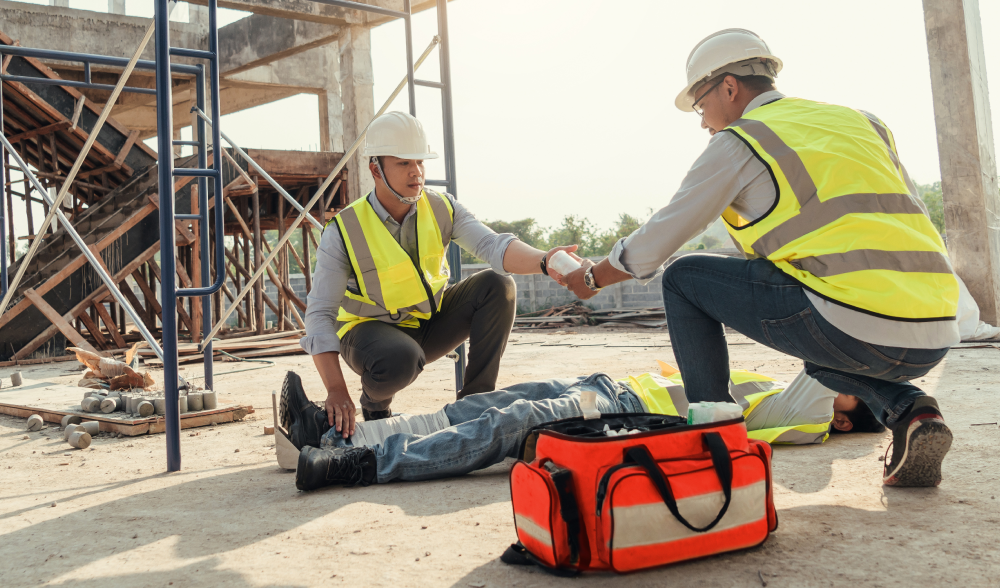
What To Do After a Fatal Construction Accident
Losing a family member due to a preventable construction site accident is devastating. The following steps help protect a family’s rights while navigating profound loss.
1.
2.
3.
4. Decline a recorded statement to an insurance company without legal counsel.
5.
How Construction Accident Cases Are Proven
Fatal construction accident claims are built on establishing four legal elements.
- Duty of Care: the company or institution responsible for the worksite owed the worker a legal duty to ensure a reasonably safe environment.
- Breach of Duty: the responsible party violated that duty.
- Causation: the breach of duty directly caused the fatal injury.
- Damages: the family suffered measurable harm as a result of the accident.
Each element must be established for a claim to succeed. An experienced New Jersey construction accident attorney can help build the strongest possible case.
What Compensation May Be Available in a Fatal Construction Accident
No amount of compensation can replace a loved one. New Jersey law offers families options to seek accountability and financial relief during an incredibly difficult time.
Workers’ compensation provides limited, no-fault benefits. Accepting workers’ compensation does not prevent a family from pursuing a separate third-party claim against a negligent general contractor, subcontractor, property owner, or equipment manufacturer. When an accident is caused by faulty equipment or a defective tool, a products liability claim under the New Jersey Products Liability Act, N.J.S.A. 2A:58C-1 et seq. may provide an additional avenue of compensation.
A wrongful death lawsuit may be filed under the New Jersey Wrongful Death Act, N.J.S.A. 2A:31-1 et seq. Damages are limited to economic losses. These can include lost income and benefits, the value of lost household services, funeral and burial expenses, medical expenses incurred before death, and the monetary value of lost guidance, advice, and companionship. Wrongful death claims must be filed within two years of the date of death, under NJ Rev Stat § 2A:31-3.
The New Jersey Survivor’s Act, N.J.S.A. 2A:15-3, allows the decedent’s estate to recover for the pain and suffering the decedent experienced between the injury and death. Compensation recovered under the Survivor’s Act belongs to the estate rather than going directly to surviving family members.
New Jersey places no cap on compensatory damages. Punitive damages, where available, are capped at $350,000 or five times the compensatory award, whichever is greater, under N.J. Stat. § 2A:15-5.14.
A New Jersey Construction Accident Attorney Can Help Build Your Case
New Jersey families do not need to navigate a fatal construction accident claim alone. The personal injury attorneys at Eichen Crutchlow Zaslow have represented injured workers and their families throughout New Jersey for more than 40 years and have recovered over $1 billion for injured clients. Our attorneys are prepared to investigate the circumstances, identify all responsible parties, and pursue full compensation.
Contact Eichen Crutchlow Zaslow for a free confidential consultation.
Eichen Crutchlow Zaslow, LLP has purposely remained small in size, because it is important to us that we get to know our clients and their needs. Larger NJ injury firms may churn out case after case, but that’s not how we operate. Partners Barry Eichen, William Crutchlow, and Daryl Zaslow have created a firm with the resources to handle complex litigation, and a team that takes your case personally.
Find out more about Eichen Crutchlow Zaslow, LLP